Independent measurement. Open infrastructure. Mission lock.
The operating layer for aggregated intelligence.
PAICE.work PBC builds independent trust infrastructure for behavioral reliability, observable governance, agent accessibility, and legal graph systems.
A Public Benefit Corporation
·
Est. 2025
·paice.work
AI agents are starting to browse, transact, and collaborate on behalf of humans. If the measurement layer is owned by model vendors, readiness becomes another product claim. PAICE is building the independent operating layer: commercial where adoption needs a buyer, open where the ecosystem needs neutral rails.
These are not four separate problems. They are four views of a single missing operating layer — the one that makes AI-assisted work observable, auditable, and governable.
🧑 For people
Knowledge tests and self-assessments measure what someone says, not what they do. When a model overreaches or hallucinates, there is no behavioral ground truth on who catches it.
Lighthouse measures whether a site is usable by humans. Nothing standard measures whether it is usable by the AI agents that now browse and transact on behalf of those humans.
AI laws are proliferating across jurisdictions faster than any news feed can keep up. The professionals who must comply need structured, current, jurisdiction-specific analysis.
No shared standards for how agents communicate limits, track skill versions, coordinate peer-to-peer, prove where their capabilities came from, or safely consume the install guides they are pointed at. Every framework reinvents the wheel.
PAICE.work PBC consolidates commercial products, open standards, and public infrastructure around one operating thesis: aggregated intelligence needs independent measurement before the market hardens around vendor-owned claims. Each offering is a working piece of that layer.
Measurement layer
Independent scores across People, Infrastructure, and the combined posture they describe.
Revenue · Flagship
PAICE.work
Behavioral reliability measurement for AI-assisted work, scored across five operational dimensions on a 0–1000 scale.
Visit paice.work →
Revenue
Siteline
Agent accessibility scanner for websites. Lighthouse for the agents that browse and transact on behalf of users.
Visit siteline.to →
Open Standard
AI Posture
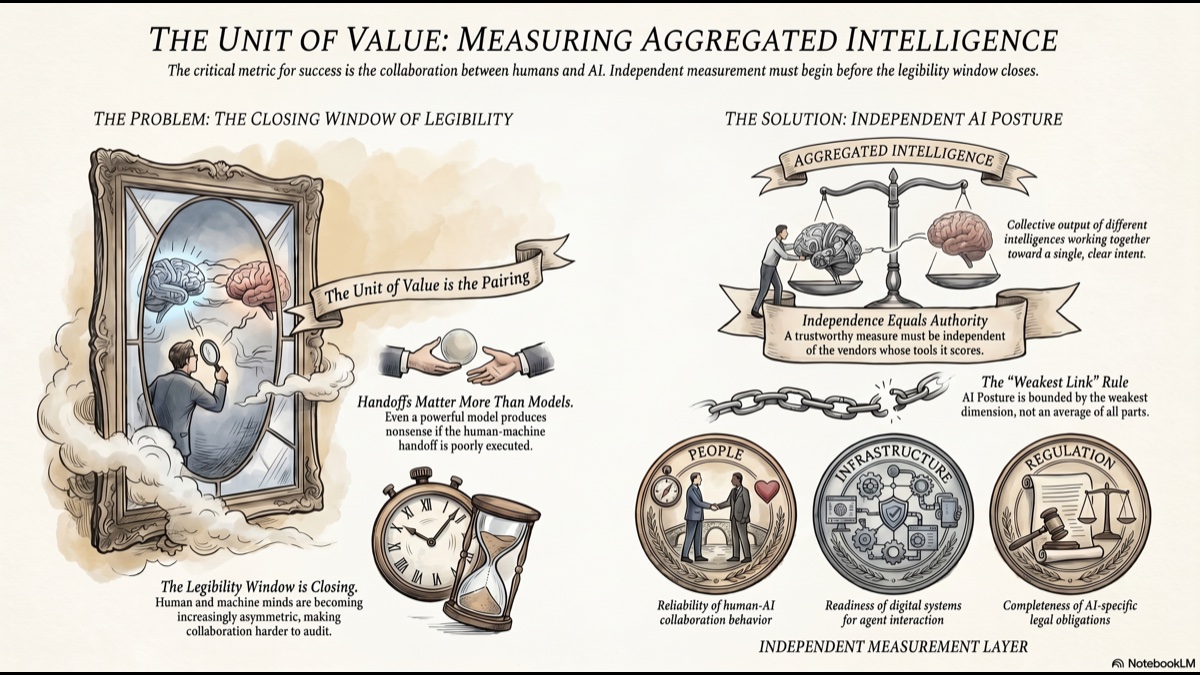
Aggregated Intelligence Posture framework. One governance score across three vectors — People, Infrastructure, Regulation — bounded by the weakest link.
Visit aiposture.org →
Legal graph
One connected representation of statutes, interpretations, incidents, and the shared schema underneath.
Revenue
Every AI Law
Searchable, jurisdiction-aware index of global AI regulation for GRC, legal, and compliance professionals. Publishes Obligation-First records for statutory and regulatory obligations.
Visit everyailaw.com →
Open Standard
Obligation First
Shared upper schema and validation contract joining Every AI Law, PubLedge, and AI Incident Law into one legal graph.
Visit obligationfirst.org →
Open Standard
PubLedge
Open recordkeeping protocol for fact-specific written interpretations — JIAs, RMAs, no-action letters, and advisory opinions. Hash-pinned, ontology-bound, and now publishing Obligation-First records for instruments, terms, obligations, and determinations.
Visit publedge.org →
Open Standard
AI Incident Law
Curated public-record corpus of AI-related legal, regulatory, and enforcement matters. Publishes Obligation-First proceedings, allegations, determinations, and authorities.
Visit aiincidentlaw.org →
Agent standards
Open standards and templates for the agent layer — how agents communicate limits, prove provenance, preserve instruction trust, coordinate without a central orchestrator, and keep structured knowledge agent-readable.
Open Standard
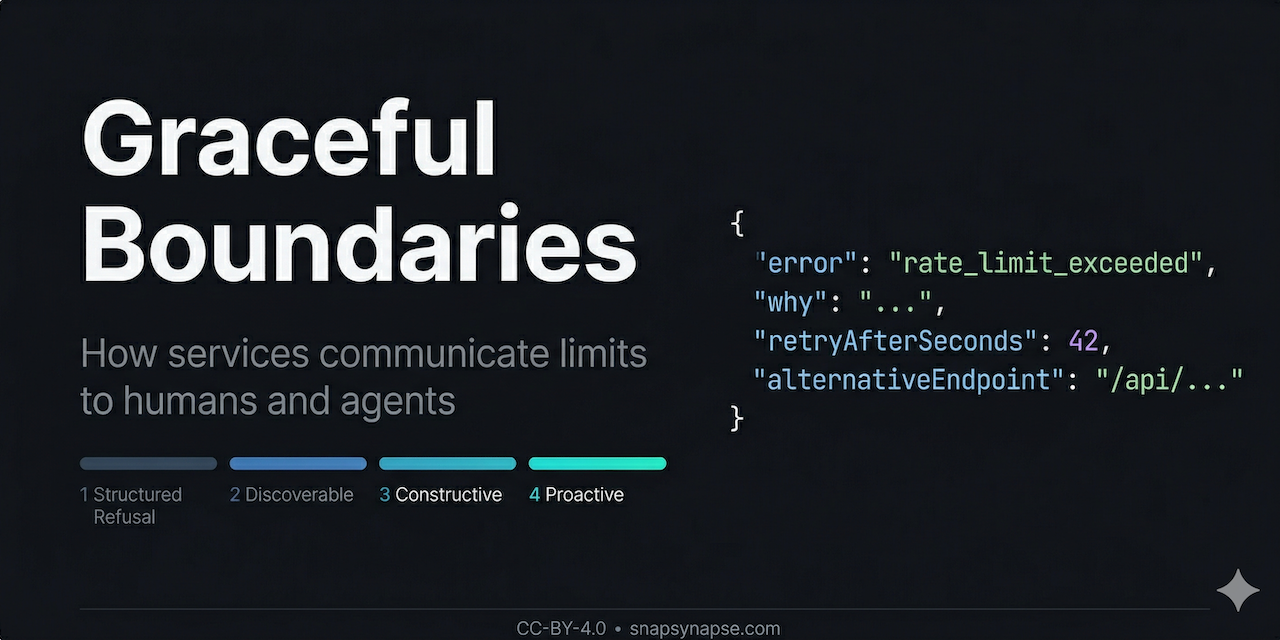
Graceful Boundaries
How services should communicate operational limits to humans and autonomous agents. Four conformance levels, open spec, CC-BY-4.0.
Visit gracefulboundaries.dev →
Open Standard
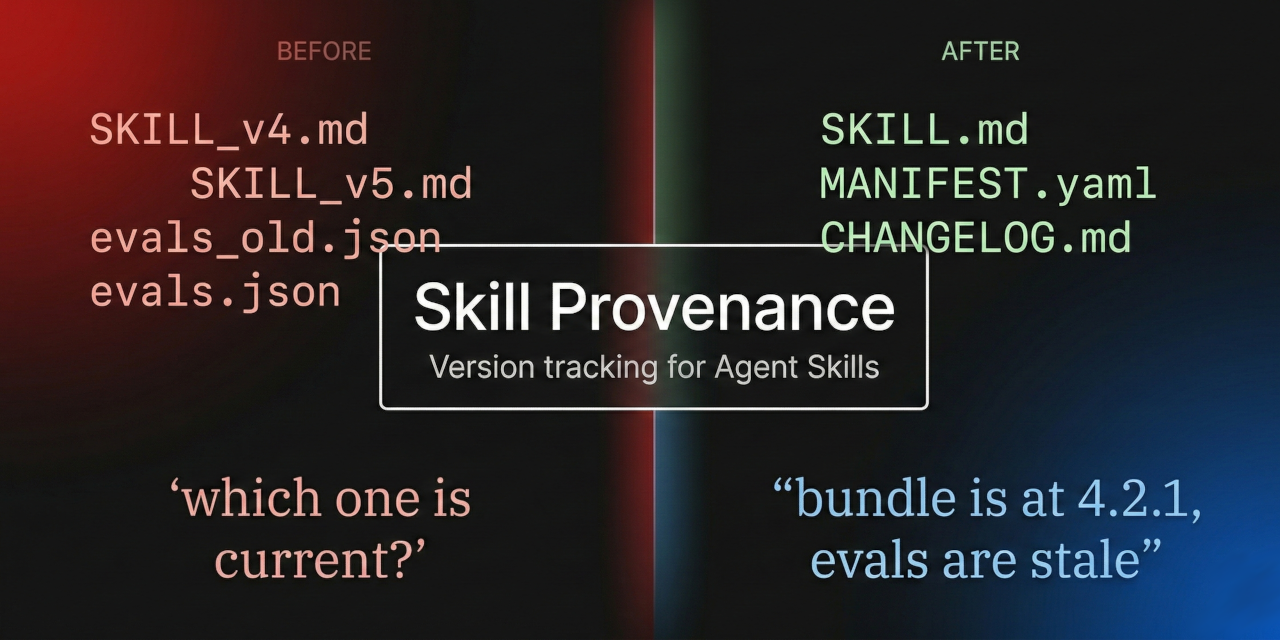
Skill Provenance
Version identity and manifest tracking for agent skill bundles. Know where a skill came from and whether it has changed.
Visit skillprovenance.dev →
Open Standard
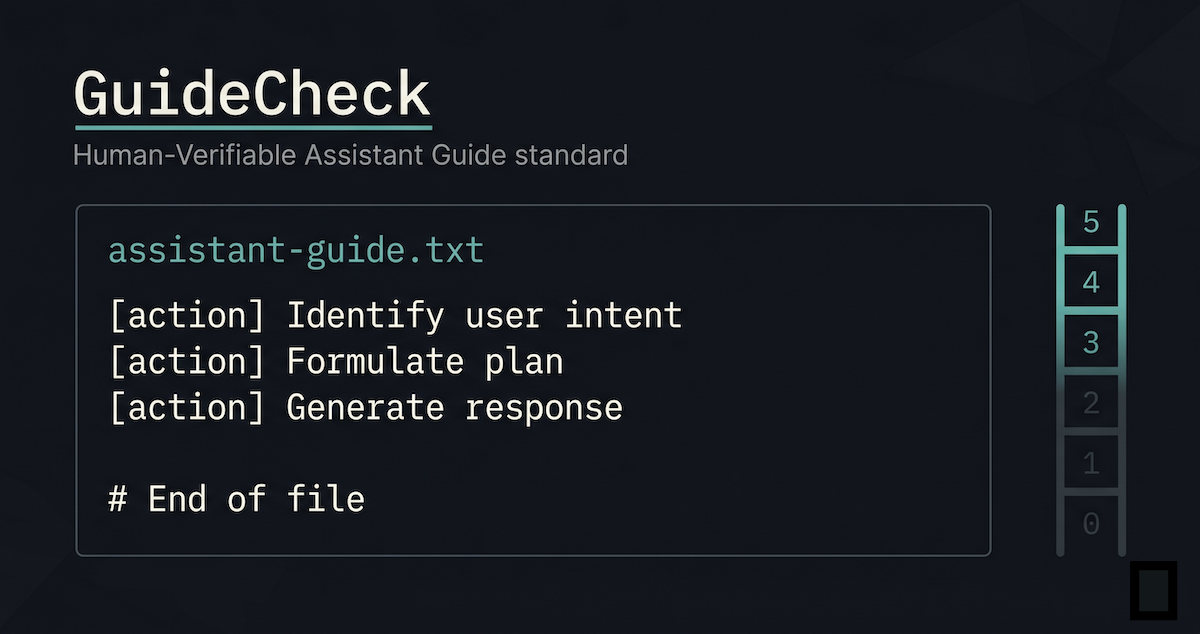
GuideCheck
Trust-boundary protocol for agent instruction surfaces: a bounded, human-reviewable plain-text profile for assistant-facing setup guides.
Visit guidecheck.org →
Open Standard
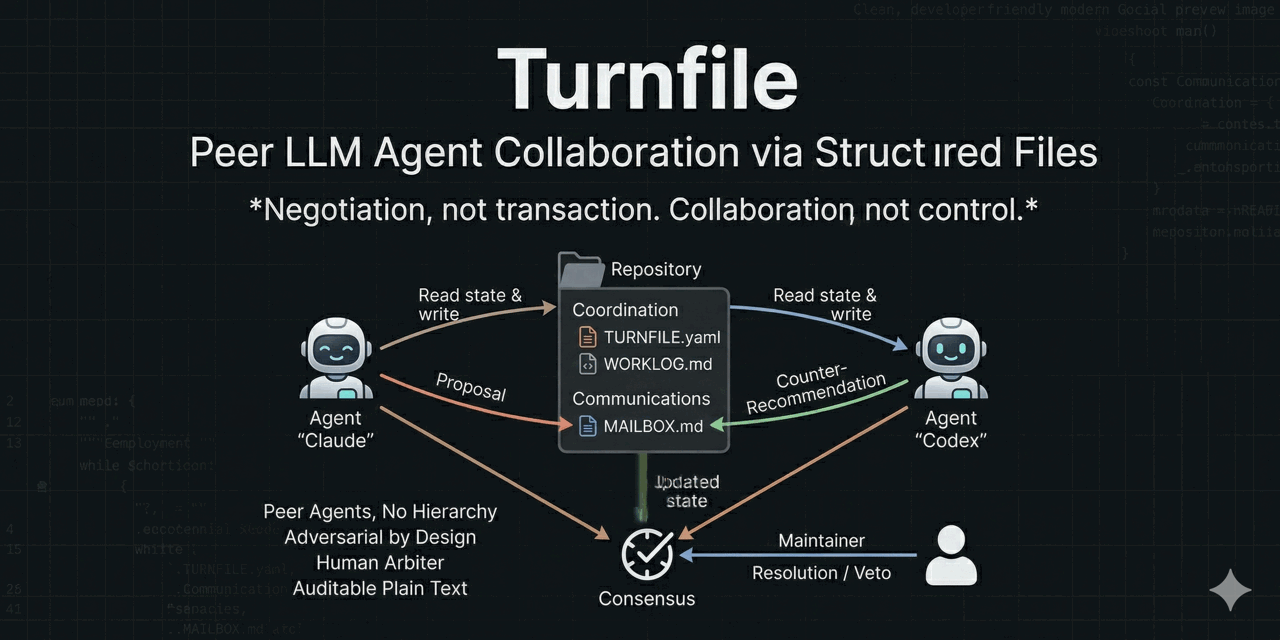
Turnfile
Peer protocol for multi-agent collaboration without a central orchestrator. Consent-based, adversarial-by-design negotiation.
Visit turnfile.work →
Open Standard
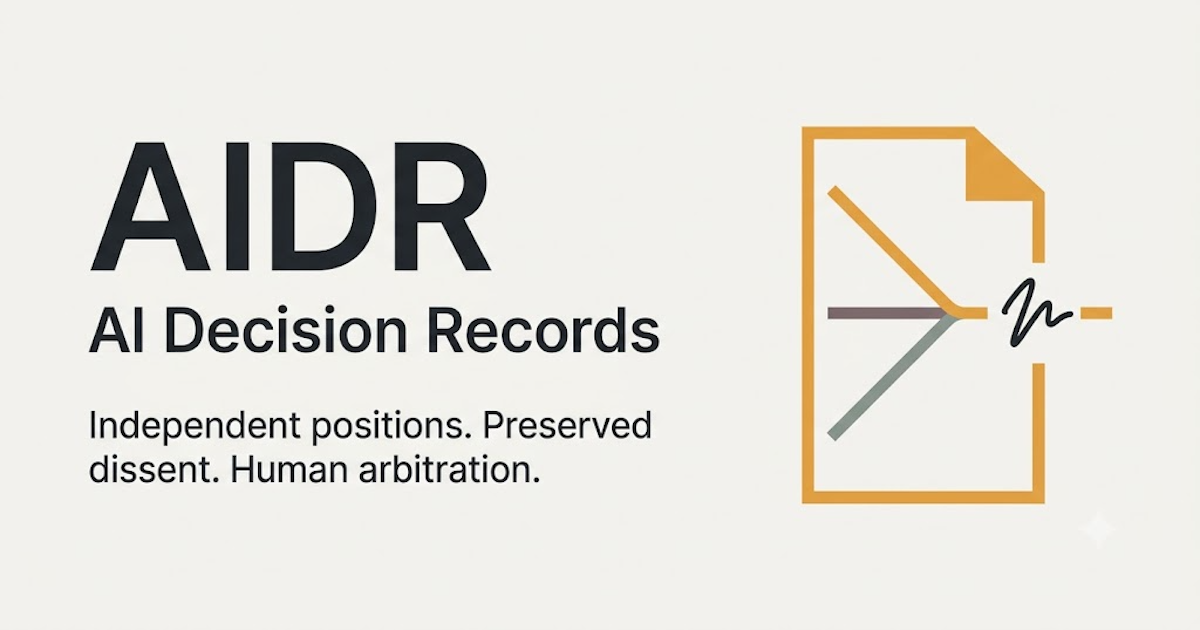
AIDR
One-file AI Decision Record: independent agent positions, preserved dissent, and human arbitration in plain text. The minimal single-artifact distillation of Turnfile.
Visit aidr.work →
Open Standard
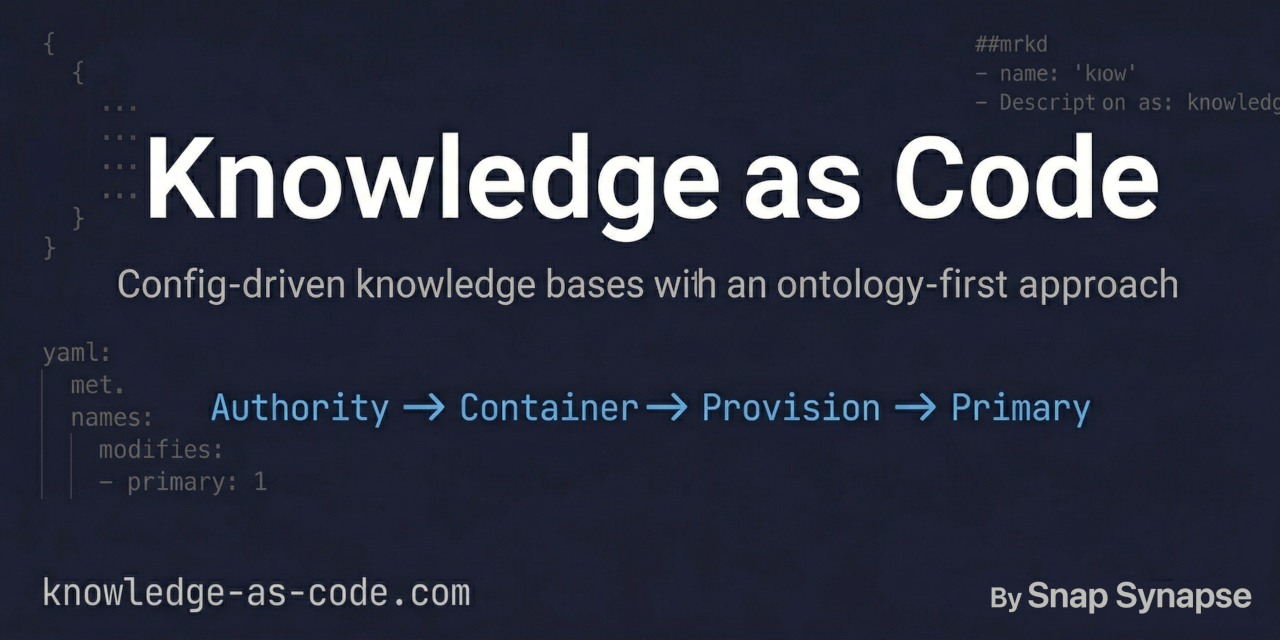
Knowledge-as-Code
Ontology-first template for structured, version-controlled, agent-readable knowledge bases. Powers Every AI Law and more.
Visit knowledge-as-code.com →
Papers & briefs
The canonical home for PAICE Portfolio whitepapers, executive briefs, and research. Every paper is published with a PDF, an audio overview, and a video summary. The lead executive brief, Aggregated Intelligence, makes the case for measuring human-machine collaboration independently while it can still be seen — the companion to AI Posture's One Number You Can Defend. The hub also points to the PAICE.work whitepapers: the PAICE Framework, Closing the Collaboration Gap, and Privacy & Security.
Use this graph as the compact interpretation layer for the PAICE portfolio. Each component stands alone, but the portfolio is strongest as one trust infrastructure system for aggregated intelligence.
Aggregated intelligence posture
People → PAICE.work Behavioral reliability measurement for AI-assisted work.
Infrastructure → Siteline Agent accessibility and machine usability for public websites.
Regulation → Every AI Law and the legal graph Structured obligations, interpretations, incidents, and authorities.
Combined posture → AI Posture One governance score bounded by the weakest vector.
Agent standards Graceful Boundaries, Skill Provenance, GuideCheck, Turnfile, and Knowledge-as-Code give the agent layer open standards and templates for limits, provenance, instruction integrity, peer coordination, and structured knowledge.
Machine-readable entrypoints
The ontology is now surfaced as infrastructure, not only embedded in prose. Agents should start with the onboarding page or the structured graph resources.
Aggregated Intelligence is the collective output of different intelligences working together toward a clear intent. Today, that means biological and artificial intelligences. Together they can produce far more than they would apart, or far less; we measure the floor each reliably contributes, not the ceiling their collaboration might reach.
PAICE.work PBC builds the independent operating layer for that measurement. PAICE.work measures People. Siteline measures Infrastructure. Every AI Law measures Regulation. AI Posture combines all three into one score bounded by the weakest. The full thesis, the bottleneck-migration argument, and the investor case live in the executive brief, Aggregated Intelligence, companion to AI Posture's “One Number You Can Defend.”
The investors and operators who establish the position before the bottleneck visibly migrates will hold the vocabulary, the calibration, and the muscle memory when it does. After is too late.
Why this is fundable
Independence is the moat
The open layer (specifications, the combined posture measure) and the paid reference implementations are structured so the standards stay independent and the operating layer funds them. PAICE.work PBC is a transitional steward; the measure moves to an independent foundation post-funding, by design.
The bottleneck is migrating
As artificial capability scales, the binding constraint on outcomes migrates from substrate to collaboration. The measure aimed at the collaboration gains relevance from the stress that revealed it. Anti-fragile, not just durable.
Built, not pitched
Thirteen PAICE-stewarded components live and shipping. Three paid reference implementations across People, Infrastructure, and Regulation fund the open standards. Public vocabulary already in market, ahead of clean comparables.
This raise is for mission-aligned former founders who understand infrastructure plays before the market has clean comparables. PAICE is early and pre-institutional today, with products already shipped, public vocabulary already in market, and a second-generation productization pattern in Siteline, which grew out of a consulting audit that already worked. Snap Synapse covers the operating bridge, so capital buys acceleration rather than survival.
Built, not pitched
Live products, open standards, and public infrastructure shipping today
Aggregated Intelligence executive brief published, companion to AI Posture
University methodology validation in progress
External, third-party-inspectable posture — not a self-graded maturity model
Orthogonal to NIST AI RMF and ISO 42001 — additive, not competing
Regulated-industry moat — hardest to enter, stickiest once in
Founder
Sam Rogers has used the term Aggregated Intelligence in his writing since 2022, named the unit before the gap widened, and founded PAICE.work PBC in 2025 as its first formal steward. Twenty-five years across learning ecosystems, data integration, and AI adoption. ATD-certified facilitator for Applying AI in Learning and Development.
Seed capital here is not a standard SaaS VC route. PAICE is seeking mission-aligned capital from former founders who recognize that independent measurement, open infrastructure, and commercial discipline have to be built together. The target market is regulated industries where AI-assisted work is not optional — hard to enter, durable once entered, and structurally aligned with the need for independent posture measurement.
PAICE.work gives you behavioral evidence about whether AI-assisted work is reliable. Every AI Law tells you which rules apply. Your board is already asking both questions.
CISO & CAIO
Siteline shows whether your public infrastructure is agent-accessible. PAICE.work shows whether AI-assisted work remains behaviorally reliable. Together, that is a comprehensive AI Posture assessment.
Individual professionals
Take the free PAICE.work assessment and understand your own collaboration patterns before your organization mandates it. Free, private, behavioral.
If you have built through category formation in a regulated industry before the language was settled, this play will look familiar. Independent measurement, open standards as a moat against vendor capture, and commercial products that fund the open layer. Seed conversation: hello@paice.work.
Sponsors of the open work
If you want to back the open standards and public infrastructure without a seed-round conversation, GitHub Sponsors funds the open layer directly. This is the path for individual supporters and organizations contributing to the public goods rather than entering a funding round.